Bringing structure to
WhatsApp sales chaos.
Built a WhatsApp-native CRM solution to help sales agents manage leads, follow-ups, and performance without switching tools.
Sales lived on WhatsApp.
Structure didn’t.
The sales team heavily relied on WhatsApp for lead generation but struggled with shared accounts, missed follow-ups, and a lack of performance visibility.
- My role
- Product Designer
Part of the product trio - Timeline
- 4 weeks
Research, design, and testing - Tools
- Figma, Google Docs, WhatsApp, pen & paper
One number.
Too many hands.
Sales agents were struggling to manage WhatsApp-based sales conversations in a team setup:
- Leads were not assigned, causing duplicate replies or missed responses.
- There was no way to tag conversations or track follow-ups.
- Managers had no visibility into agent performance.
- The shared number setup caused confusion and lack of accountability.
Problem statementSales agents struggle to close WhatsApp leads efficiently due to shared accounts, lack of visibility, poor tagging/follow-up systems, and no performance tracking.
Listening before
designing.
What we did
- Conducted 1:1 interviews with 4 sales agents and 1 sales lead
- Shadowed agents during peak ad campaign times
- Analyzed screenshots of chat-based sales conversations
What we heard
- Agents often found themselves replying to the same lead simultaneously
- Lead conversations lacked continuity or structure
- Follow-ups were managed in memory or scattered notes
How might we…
After identifying multiple sales pain points using WhatsApp for lead management, I translated them into “How Might We” questions to explore potential solution spaces.
| Pain point | How might we… |
|---|---|
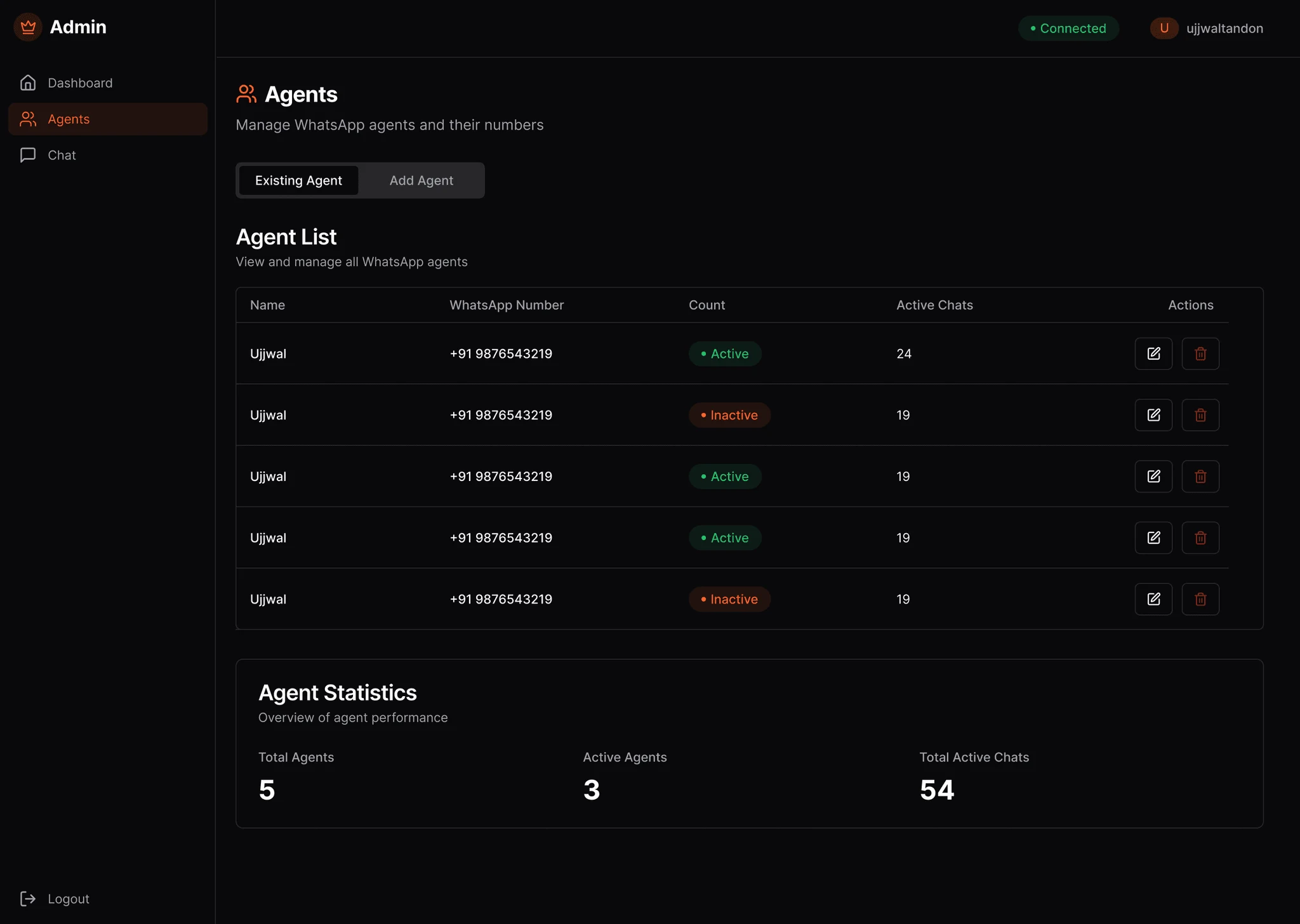
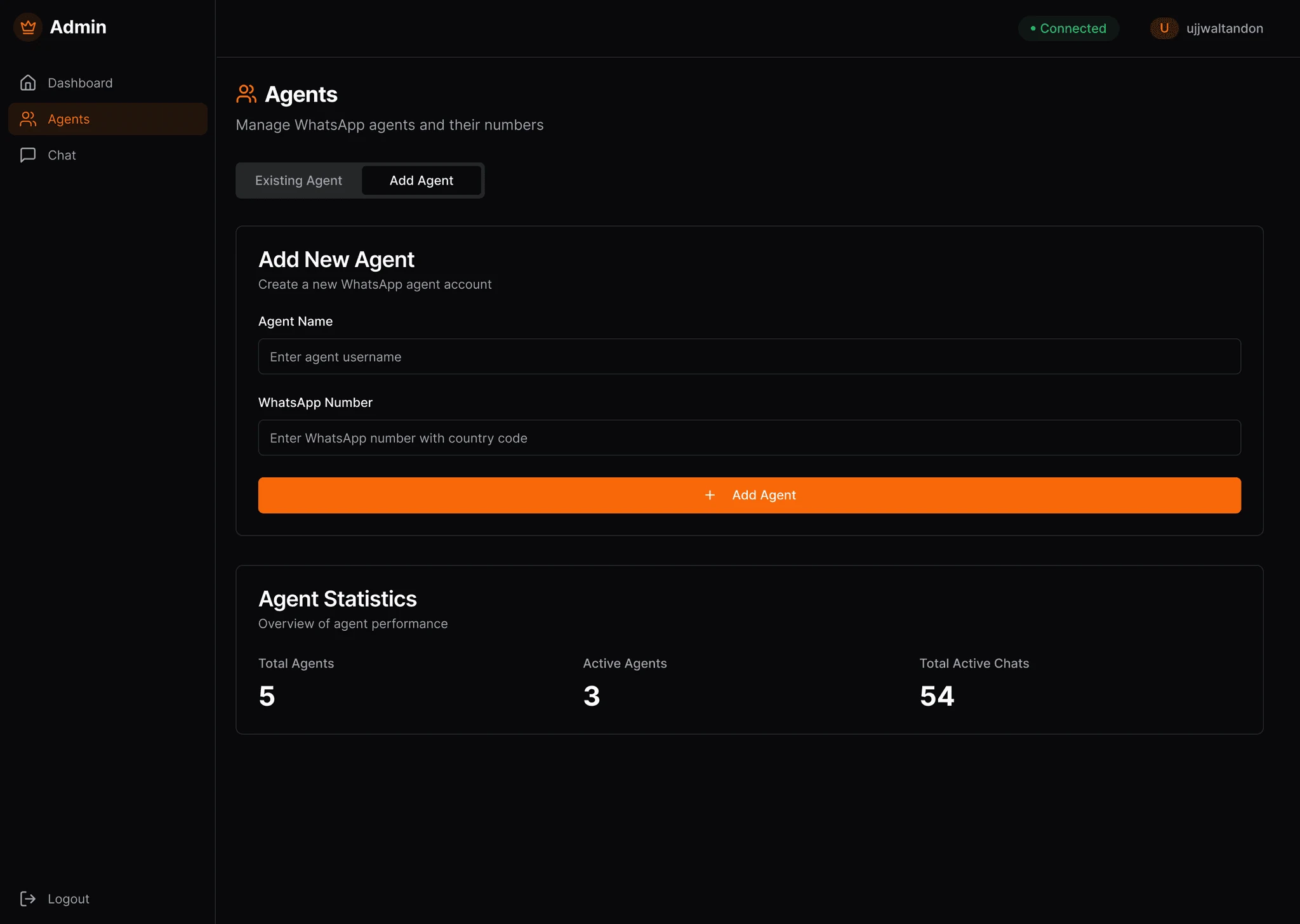
| Multiple agents using one number | make it easier to assign leads to specific agents? |
| Shared WhatsApp Web sessions constantly log out | ensure stable access across multiple devices without kicking others out? |
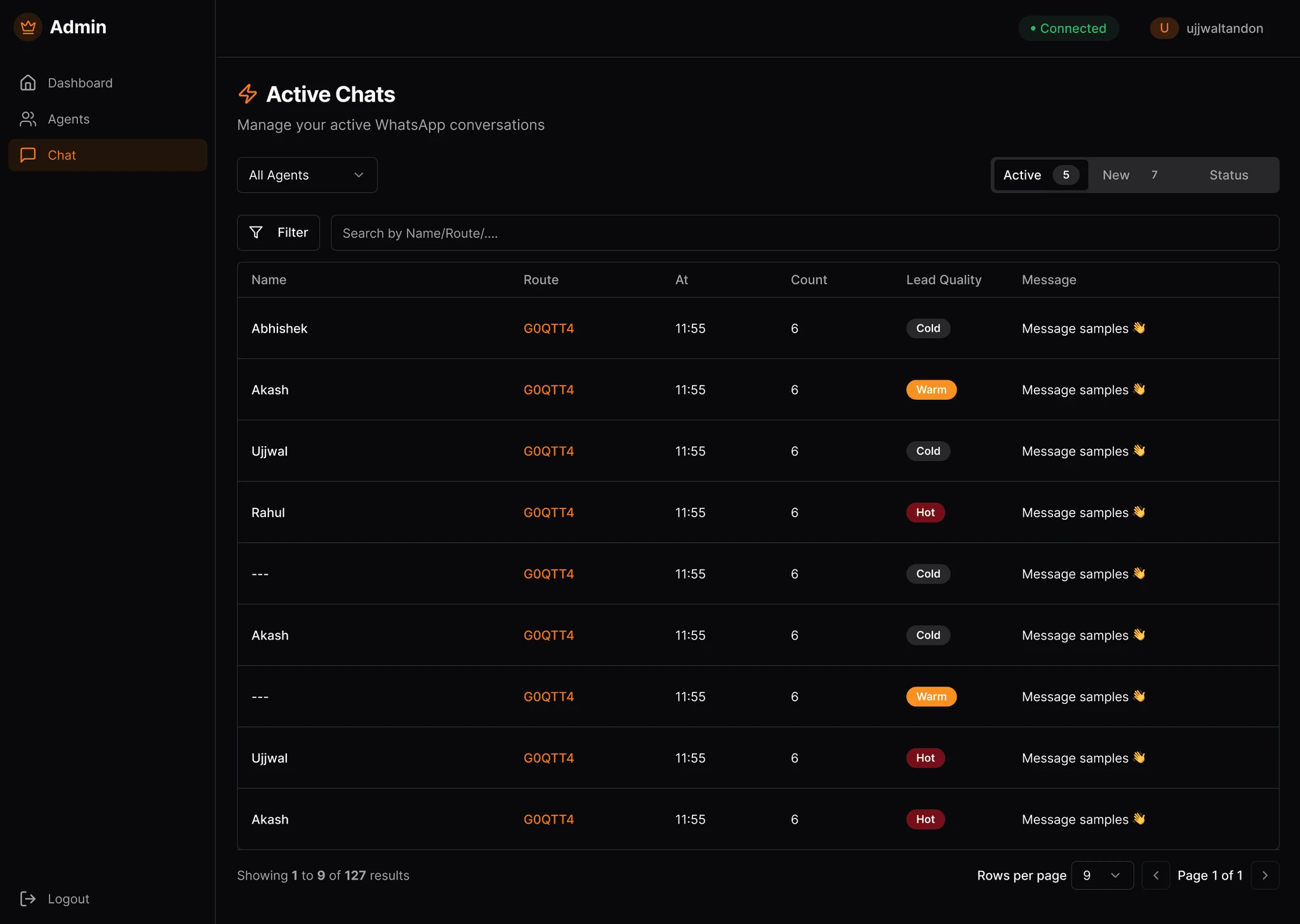
| Cluttered chats and no lead tags | help agents organize and prioritize conversations better? |
| No chat history in WhatsApp Web | retain and surface past lead conversations effectively? |
| Sync issues between devices | ensure real-time sync between web and mobile versions? |
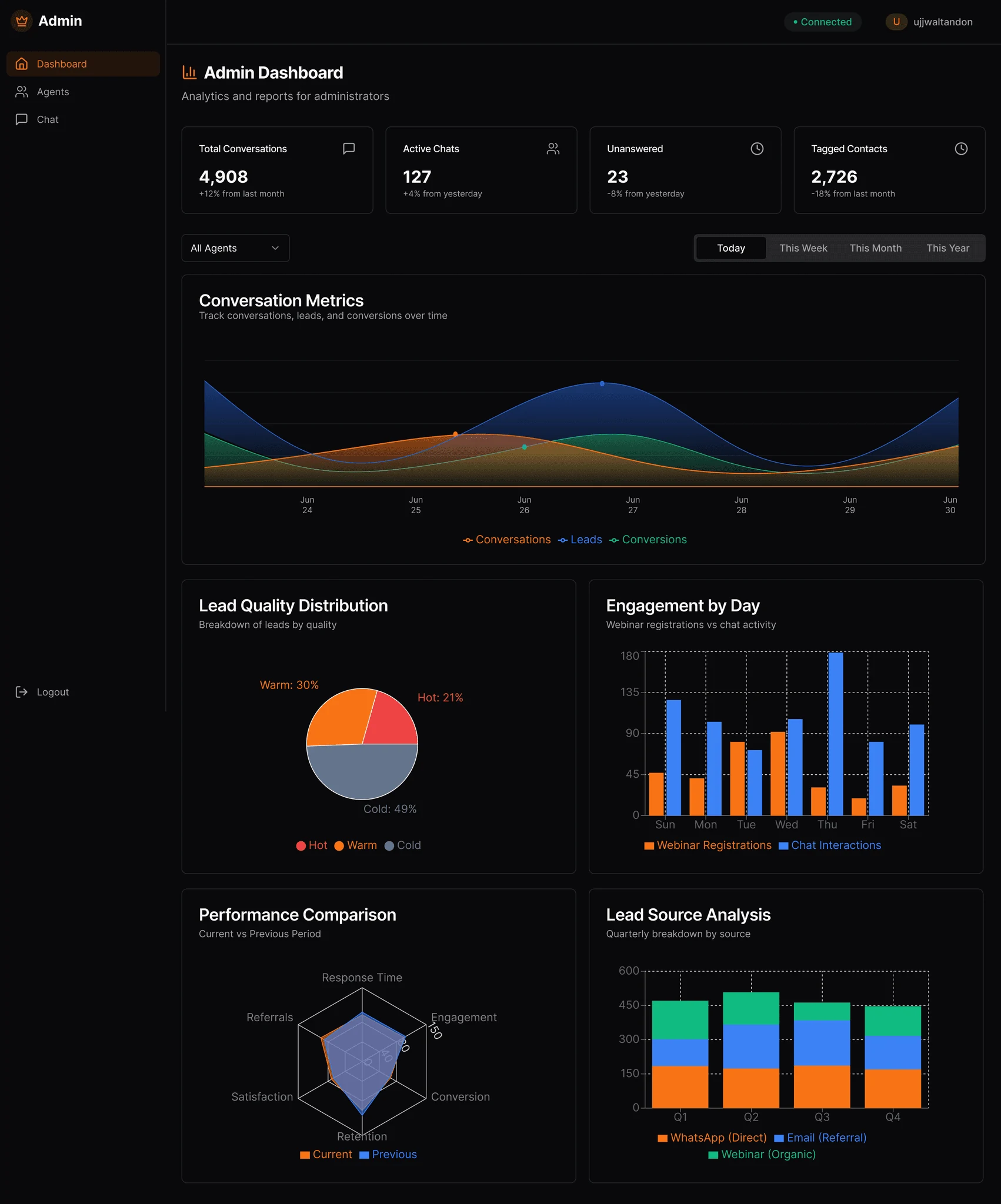
| No analytics or tracking | give visibility into lead funnel, agent performance, and conversation metrics? |
| Missed follow-ups | help agents never forget to follow up with interested leads? |
| Incoming floods of leads during ads | help teams manage surge in volume without losing valuable leads? |
| Slower response time | reduce friction and enable faster first responses? |
Inside a sales
agent’s head.
We interviewed sales executives and mapped what they think, feel, say, and do.
Thinks
- Am I supposed to reply to this lead?
- Hope I’m not replying at the same time as another rep.
- This chat doesn’t give any context about the lead’s past.
Feels
- Confused about who owns which lead
- Overwhelmed during ad campaign rush
- Uncertain about their weekly performance
Says
- “I don’t know if this lead has already been handled.”
- “Where is the last message with this person?”
- “I have no idea if I’m on track with my leads.”
Does
- Checks WhatsApp frequently for new leads
- Greets or engages new leads with basic messages
- Scrolls endlessly to find past chats
- Mentally notes leads to follow up later, often forgets
What agents were
really hiring for.
- “When I get a new WhatsApp lead, I want to know who’s handling it, so we don’t overlap.”
- “When I’m managing 20+ chats, I want to tag and organize them, so I focus on hot leads.”
- “When a lead goes cold, I want a nudge to follow up later.”
- “When an ad campaign floods us, I want leads auto-distributed, so no one is left behind.”
- “When I reply to a lead, I want to recall the past context quickly to build trust.”
A day of
chasing leads.
We mapped the typical experience of a sales agent trying to manage incoming leads on WhatsApp.
| Stage | User action | User thought | Emotion | Pain point | UX opportunity |
|---|---|---|---|---|---|
| New lead arrival | Opens WhatsApp to see new messages | “Whose lead is this? Am I supposed to reply?” | Confused | Lack of lead ownership | Auto-assignment system with lead ownership indicator |
| Initiating chat | Starts greeting or asking questions | “Hope someone else isn’t already replying.” | Anxious | Simultaneous replies by multiple agents | Lock conversation to assigned agent or show ‘typing’ status |
| Seeking context | Scrolls through chat to understand past | “Where is the last message? There’s no trail.” | Frustrated | No chat tagging or conversation history | Show lead timeline or last interaction summary |
| Lead goes cold | Mentally notes to follow up | “I’ll get back to this later…” | Distracted | No reminders or task system | Add reminder & follow-up tagging options |
| Ad campaign rush | Receives flood of chats at once | “Which ones are hot leads? Where do I begin?” | Overwhelmed | High-volume surge leads to missed or delayed responses | Prioritize leads by source, tag, and intent automatically |
| Manager check-in | Counts chats manually to report progress | “I have no clue how many leads I converted this week.” | Uncertain | No analytics or performance visibility | Add performance dashboard with leads tracked by status & agent |
Why this,
why now.
- Problem
- Agents can’t manage and convert WhatsApp leads effectively
- Context
- High volume of leads from paid campaigns
- People
- Sales agents, manager
- How important
- Missed leads = lost sales. Lead conversion is critical for achieving sales targets.
- Why now
- Recent marketing efforts have generated more leads
- Expected outcome
- Leads handled more efficiently, resulting in higher conversion rates
Built for clarity,
ready to scale.
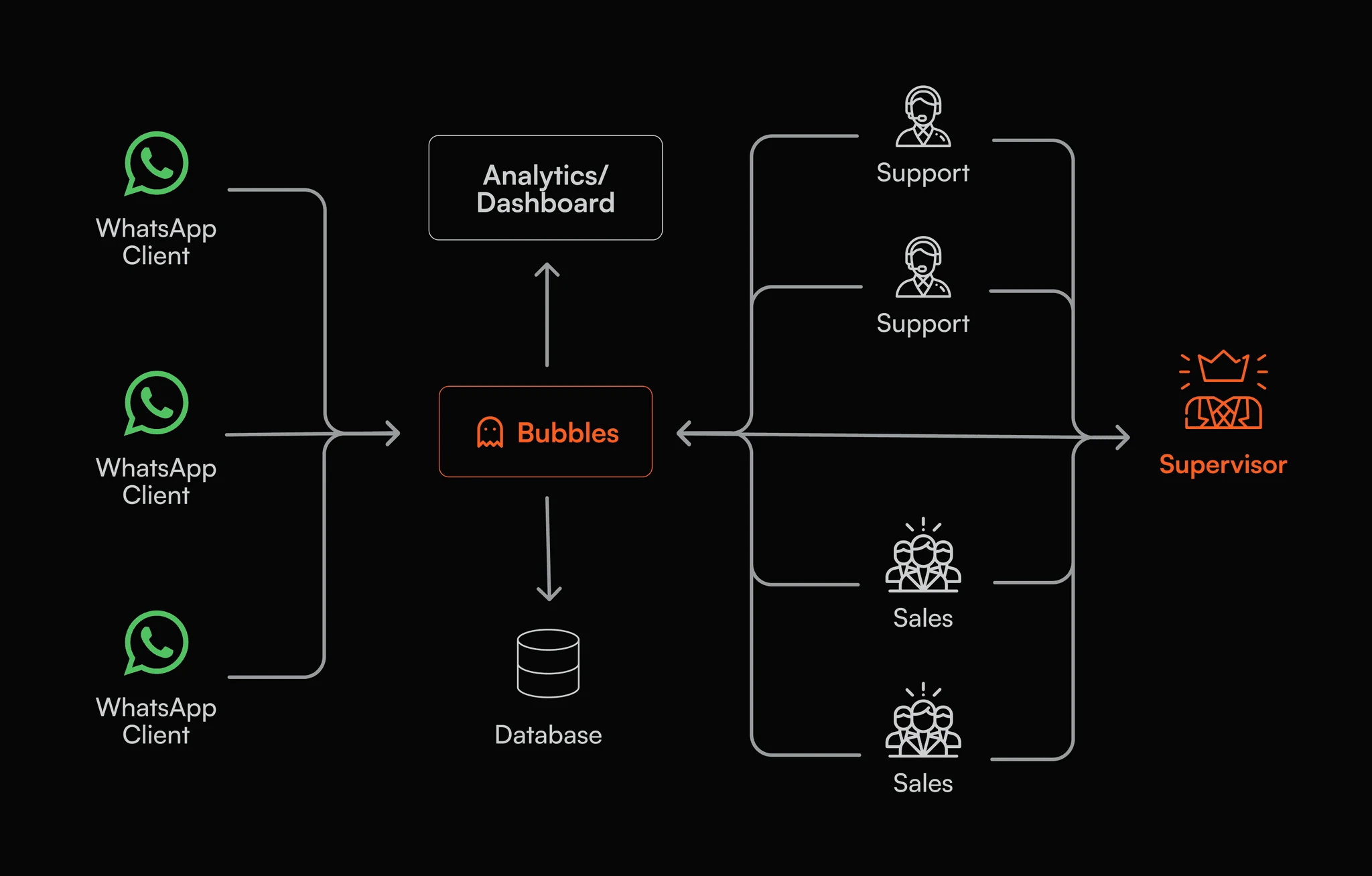
Designed for clarity, scalability, and extensibility. Every WhatsApp client flows into Bubbles, which routes conversations to support and sales, keeps a supervisor in the loop, and feeds analytics.
Putting it in
agents’ hands.
- Goal
- Validate if the tool solves lead organization, assignment, and visibility issues
- Participants
- 3 sales agents
1 marketing manager
Test tasks
- Assign incoming leads
- Tag a chat and add notes
- Set and view follow-up reminders
- Search an older conversation
- View weekly performance summary
Before and after
Bubbles.
Response time
Agents delayed replies due to confusion or overlapping replies
Faster responses due to clear lead ownership and real-time alerts
Accountability
No clear idea who was responsible for each lead
Each lead was assigned to a specific agent, avoiding duplication
Follow-ups
Often forgotten or managed manually (notes, memory)
Built-in reminders and tagging system improved consistency in follow-ups
Performance visibility
Managers manually reviewed chat logs and lacked clear performance data
Weekly dashboards provided clear insights into individual and team performance
What stayed
with me.
- Designing for chaos (high-stress environments) demands clarity and simplicity.
- Small UX improvements (tags, reminders) can drastically improve workflows.
- A tool designed with users, not just for users, sees much better adoption.
Sales teams don’t want a CRM. They want WhatsApp—but smarter.
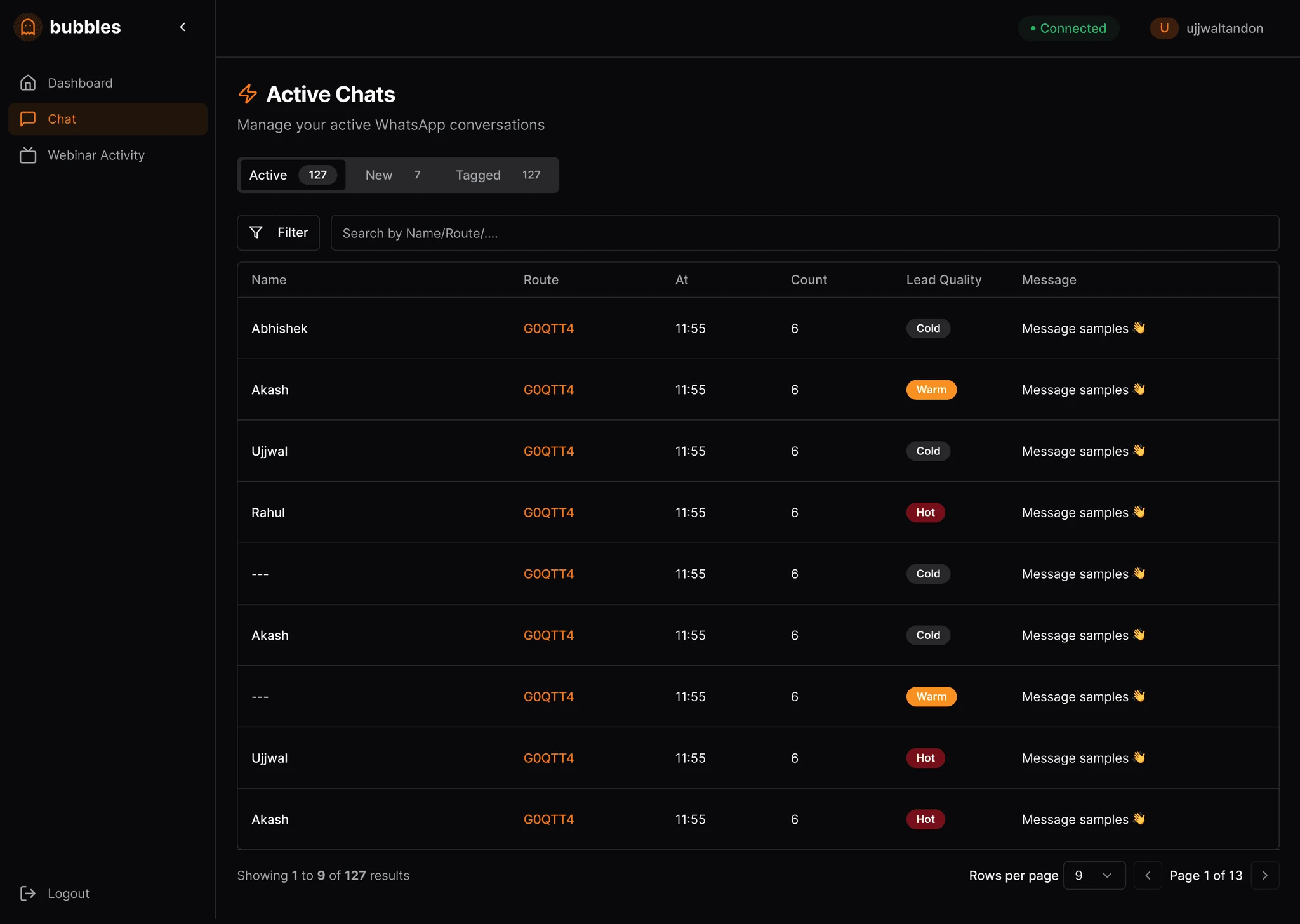
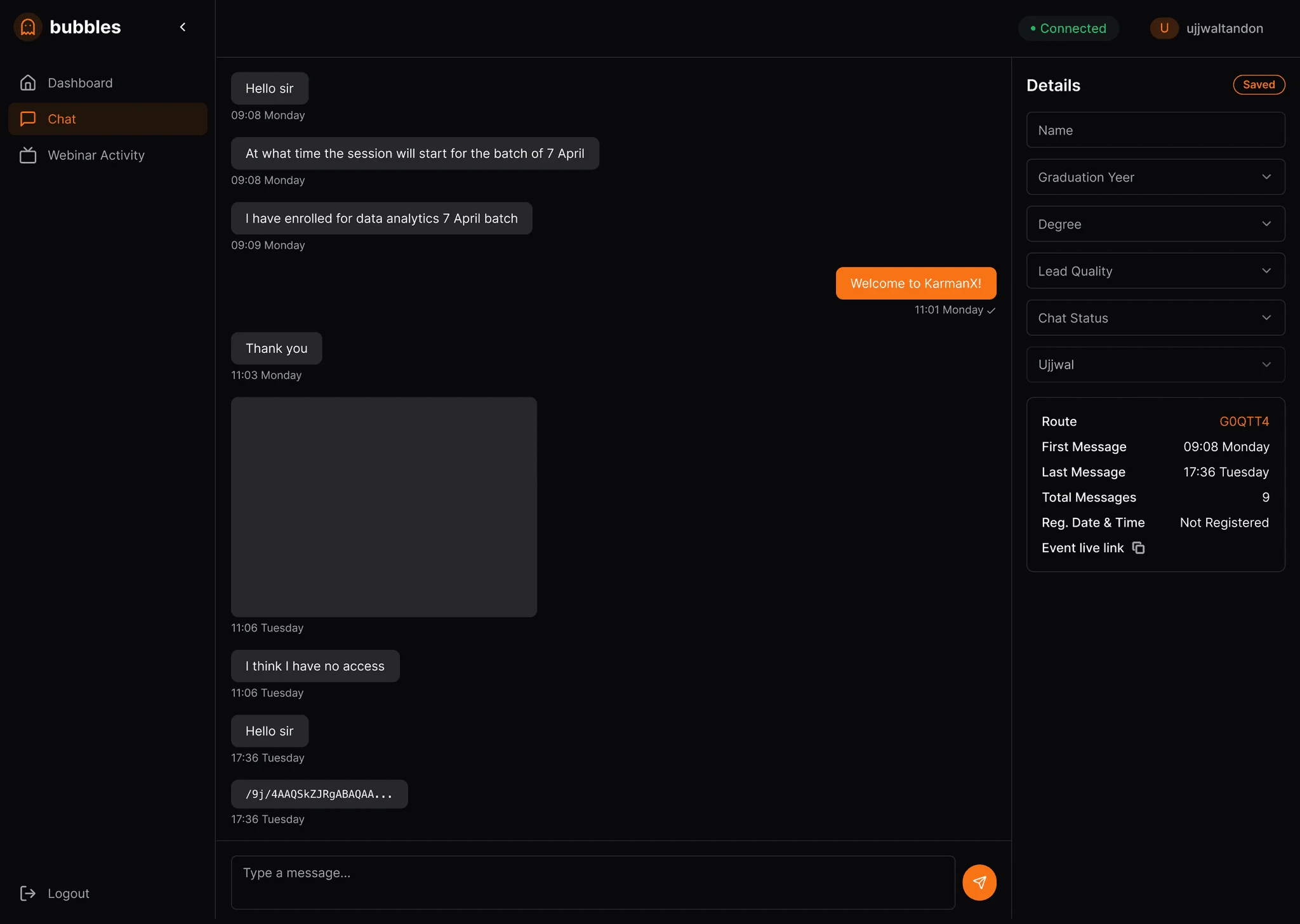
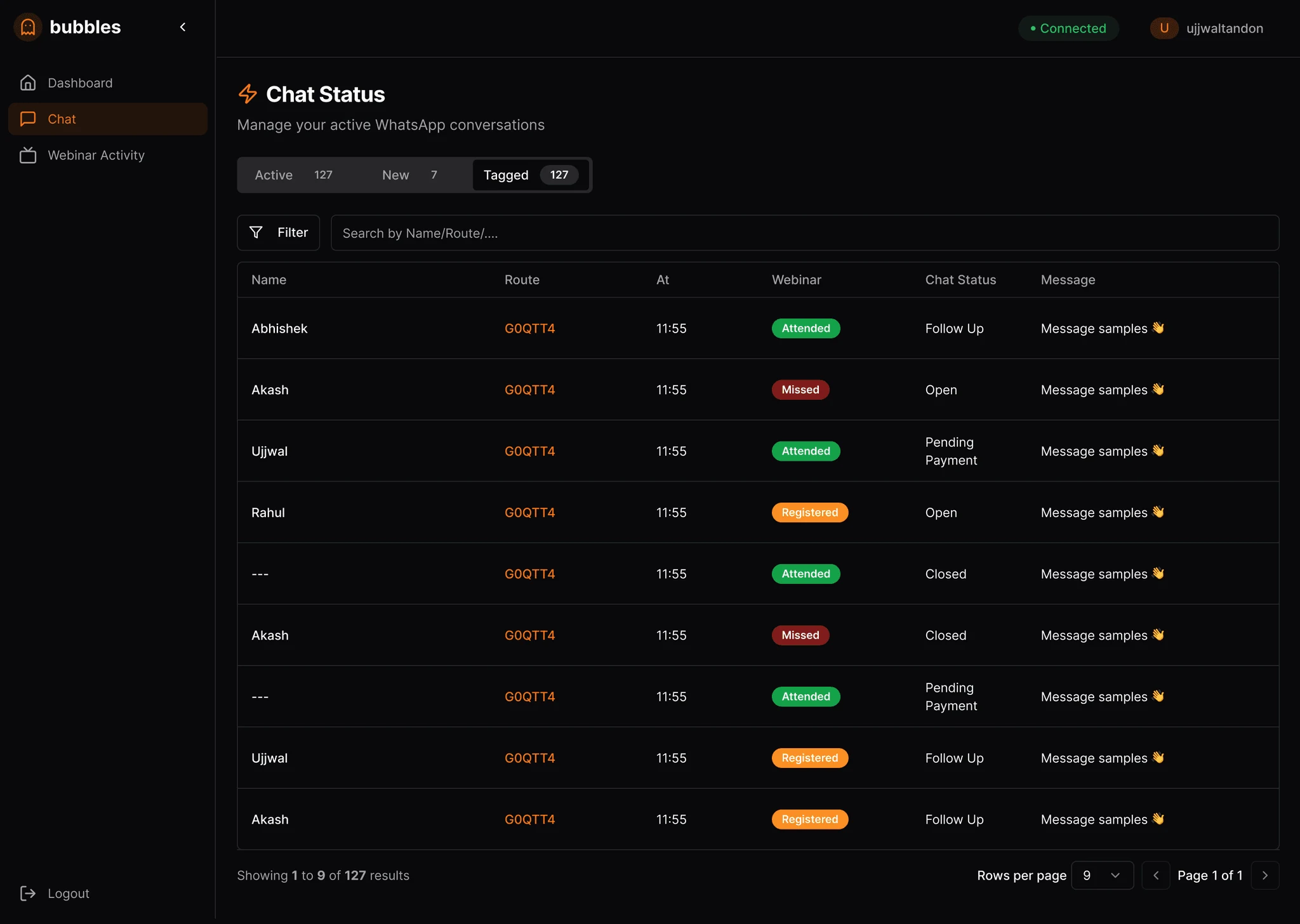
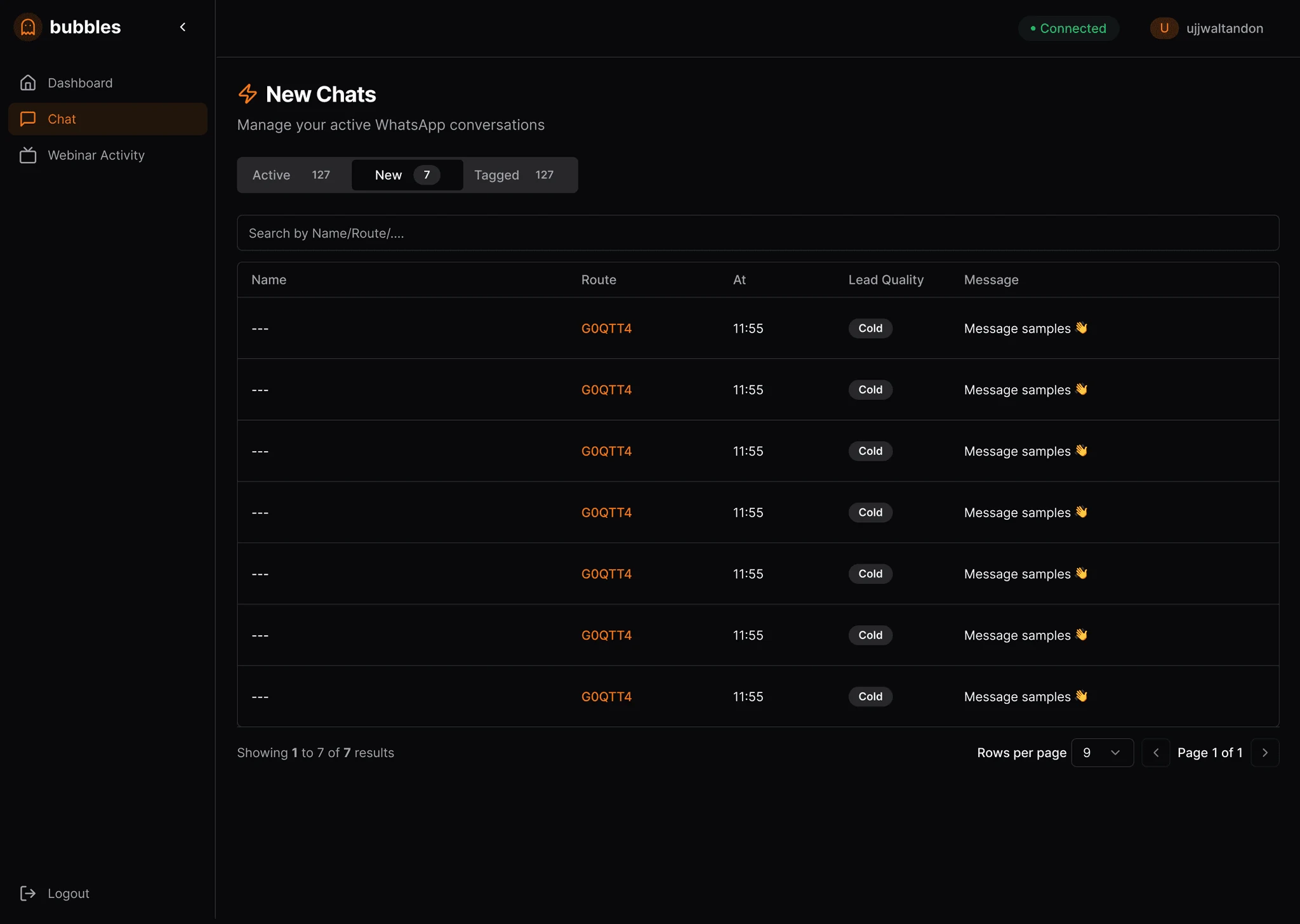
The agent’s
workspace.
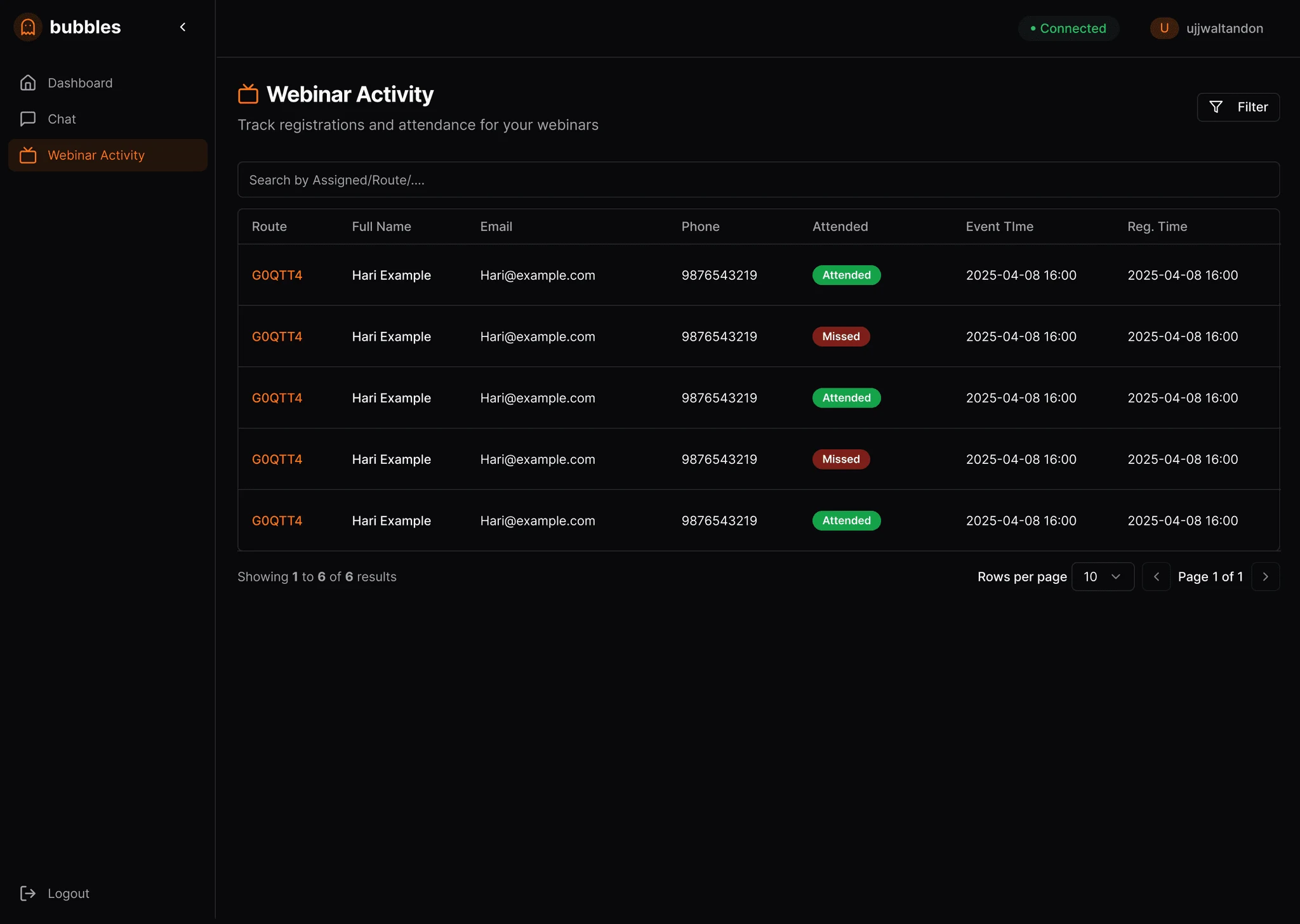
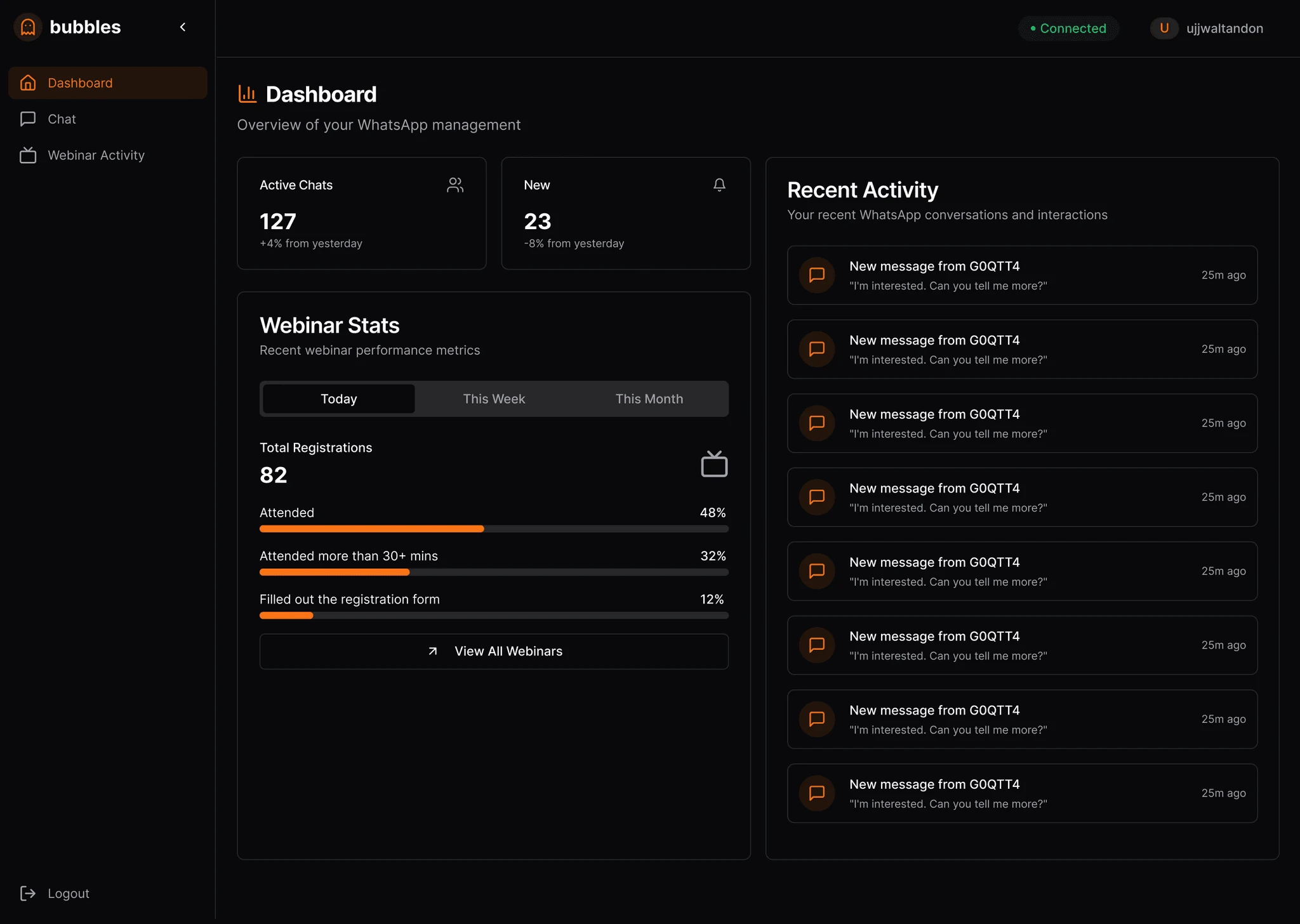
The manager’s
view.
Guardrails
around the chaos.
Bubbles started as a response to the chaotic reality of WhatsApp-based sales operations and evolved into a focused, user-driven solution that respected how sales agents already worked—while making that work significantly smoother.
Through deep discovery, empathy-led design, and lean testing, we were able to turn friction into flow. Bubbles didn’t try to replace WhatsApp; it enhanced it. By introducing small but powerful features—like lead assignments, follow-up reminders, and performance dashboards—we helped teams stay more organized, act faster, and close leads more confidently.
This project reminded me that great design doesn’t always mean reinventing the wheel. Sometimes, it means designing guardrails around the chaos. And that’s what Bubbles delivered—clarity in the middle of conversational clutter.