EEG headset
onboarding flow.
Designing a real-time impedance calibration experience for Nexstem’s motorized EEG headset.
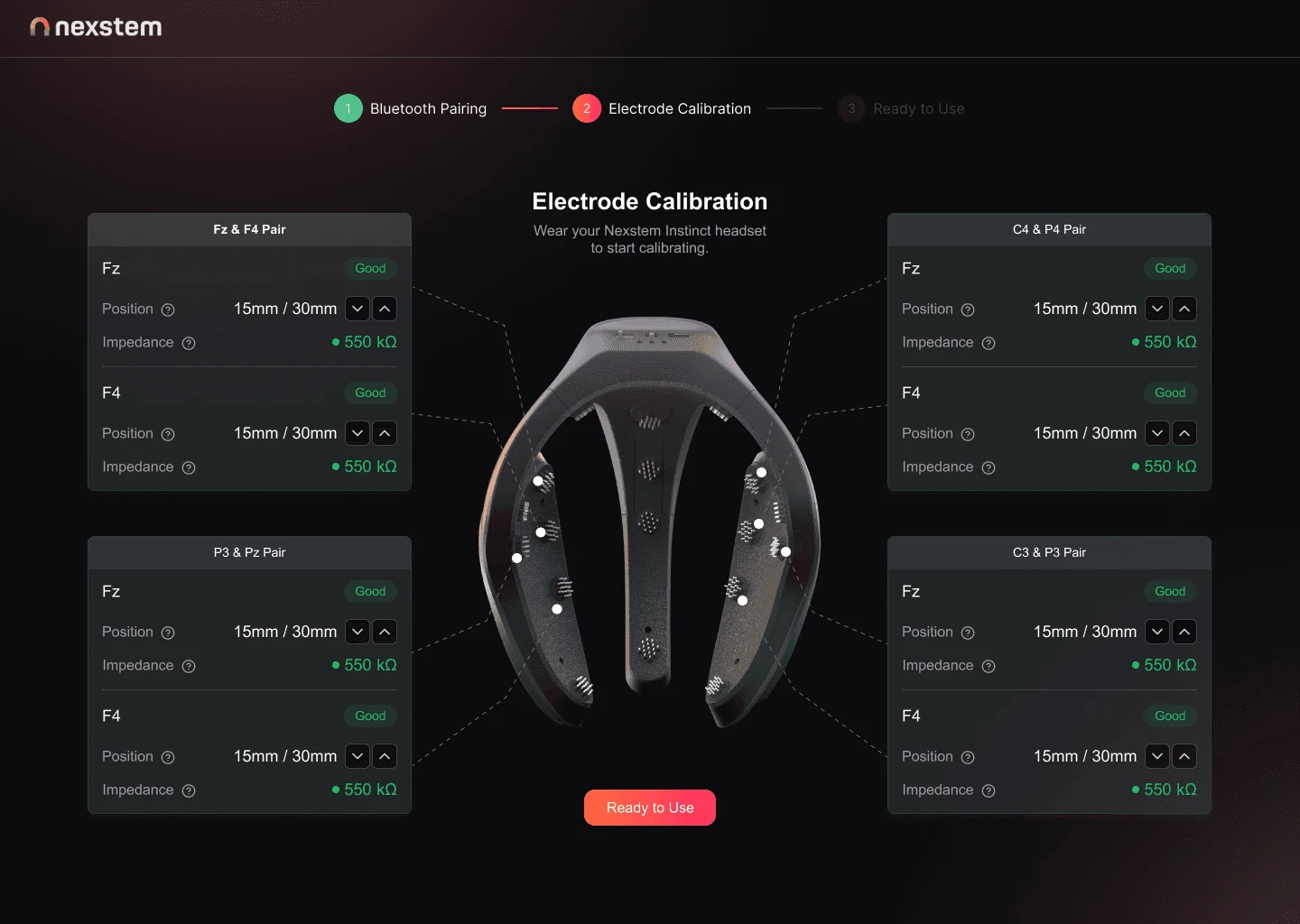
21 electrodes.
One calm setup.
Nexstem’s Instinct is a medical-grade EEG headset with 21 motorized electrodes. To capture reliable brainwave data, users must calibrate specific electrode pairs by tuning their impedance to an optimal range.
This onboarding flow was designed to guide users, often from non-engineering backgrounds, through this complex calibration process in a clear, controlled, and confidence-building way.
- Product
- Instinct EEG headset
21 motorized electrodes - Focus
- Onboarding & calibration
Pairing to first recording - Tools
- Figma, FigJam
Real hardware.
Real consequences.
Users are required to set up a physical medical/wellness device using the app. Improper calibration or unclear onboarding can lead to device misusage, poor outcomes, or support queries.
- How might we reduce setup friction while keeping it medically accurate?
- How might we guide users with zero prior experience in device calibration?
Where setup
falls apart.
Based on observation and hypothetical personas.
- Don’t understand where/how to place electrodes.
- Skip or rush through instructions.
- Struggle with Bluetooth/device connection reliability.
- App doesn’t make success/failure feedback clear.
Set it up once.
Set it up right.
Job to be done“When I get a new device, I want to set it up quickly and correctly, so I can start using it without needing to call support.”
Four moments
that decide trust.
| Stage | User action | Pain point | Opportunity |
|---|---|---|---|
| Entry | Open ‘Add New Device’ | Confusion about steps | Provide a progress bar or overview |
| Connect | Tries pairing | Bluetooth fails or unclear state | Add retry with clear states |
| Calibration | Tries following steps | Unclear what “correct” looks like | Use illustrations / animations |
| Confirmation | Sees success message | Misses what’s next | Provide guidance on next step |
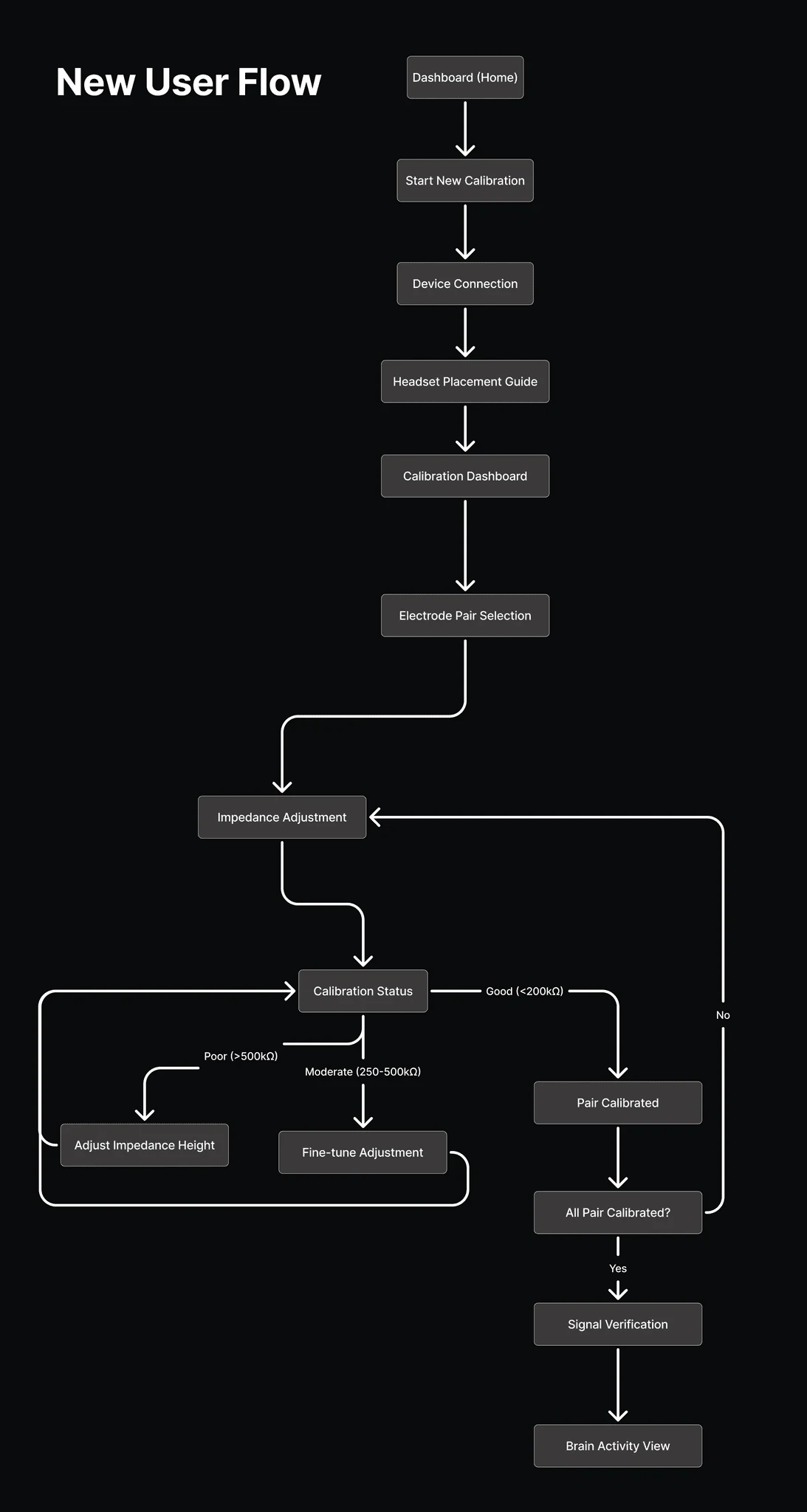
Every path,
including retries.
From the dashboard to a verified brain-activity view, with loops for impedance adjustment and re-calibration when a pair isn’t reading well.
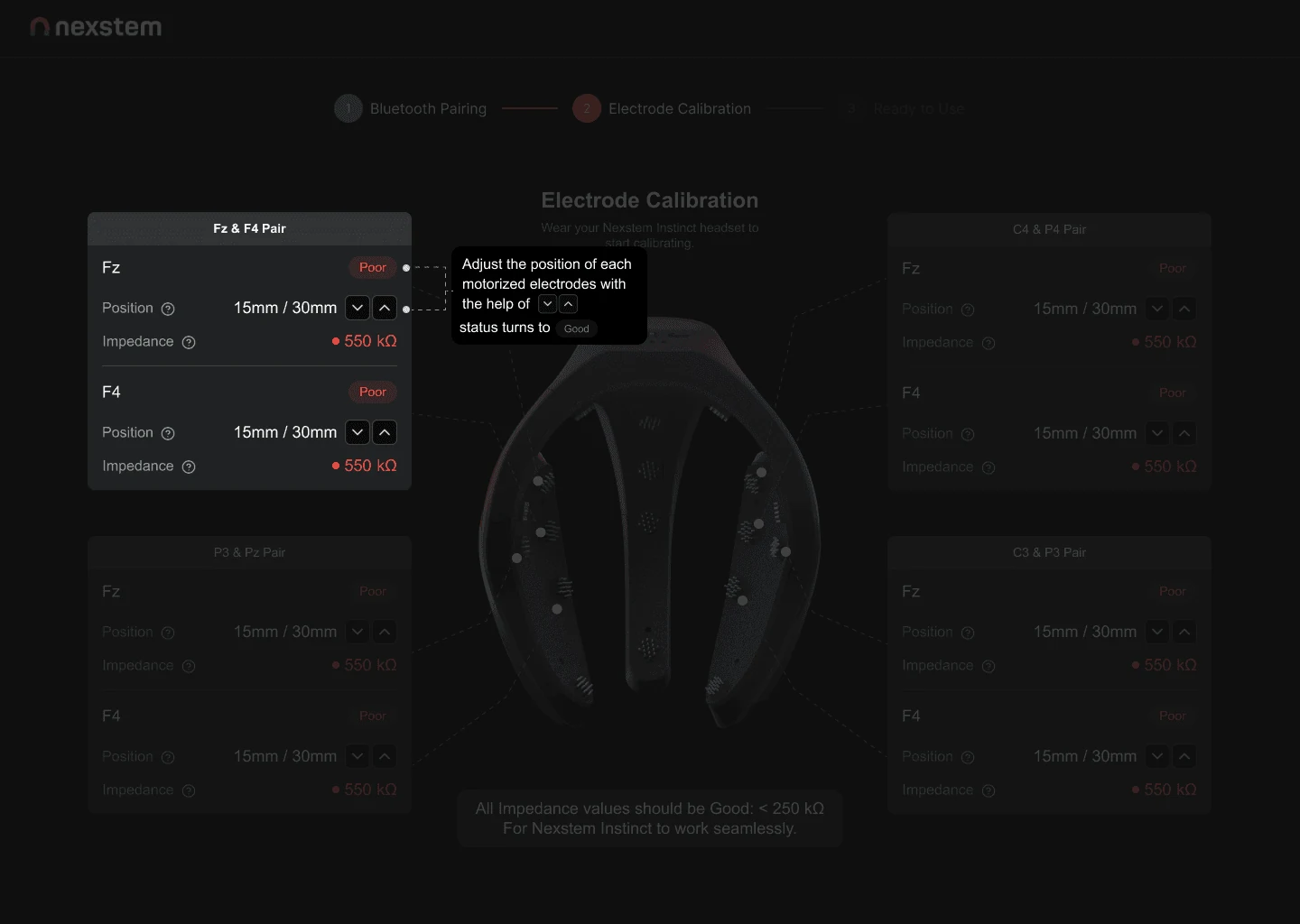
Show, don’t
dump.
- Introduced visual guidance to reduce ambiguity.
- Shows step-by-step interaction instead of dumping all info.
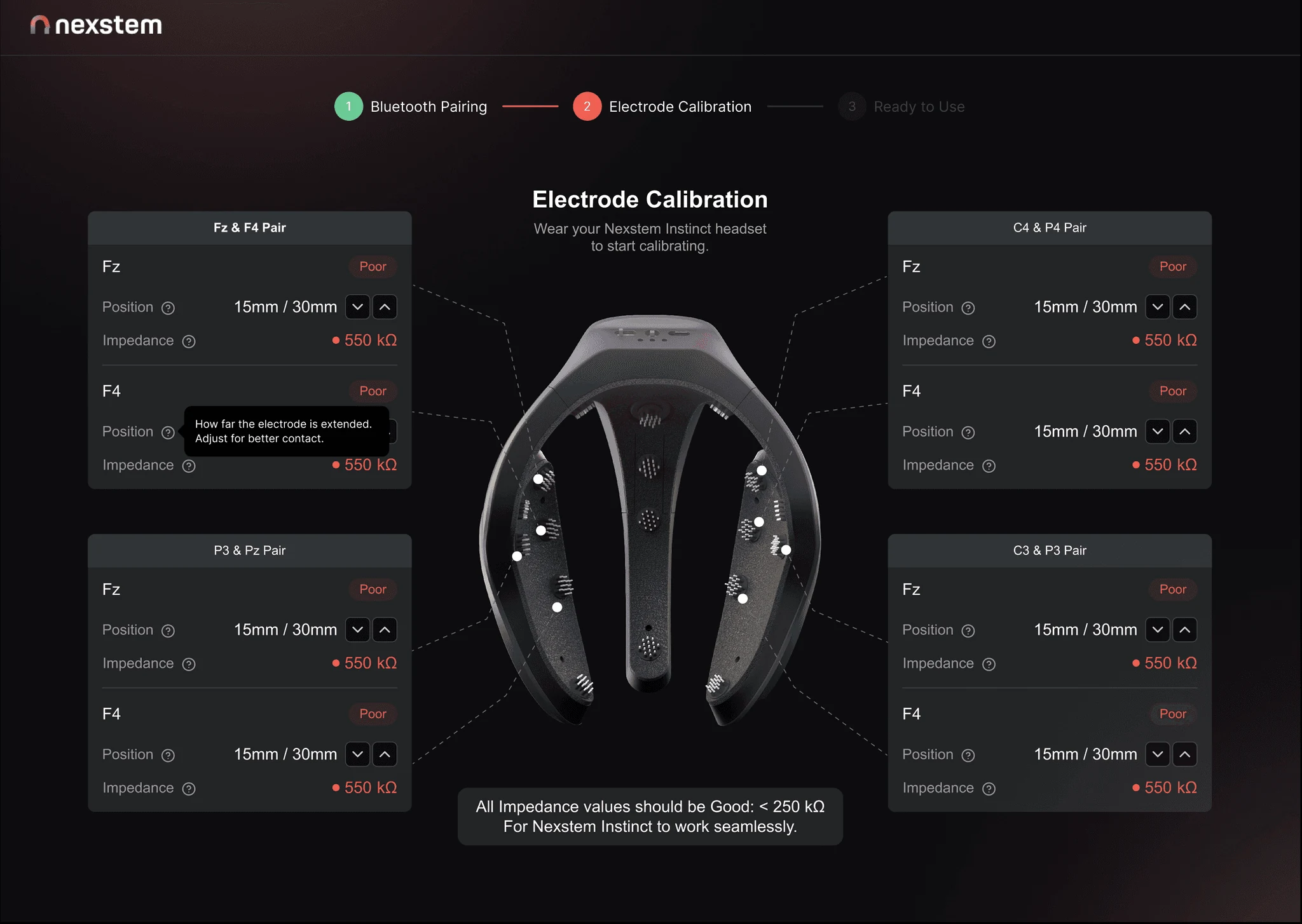
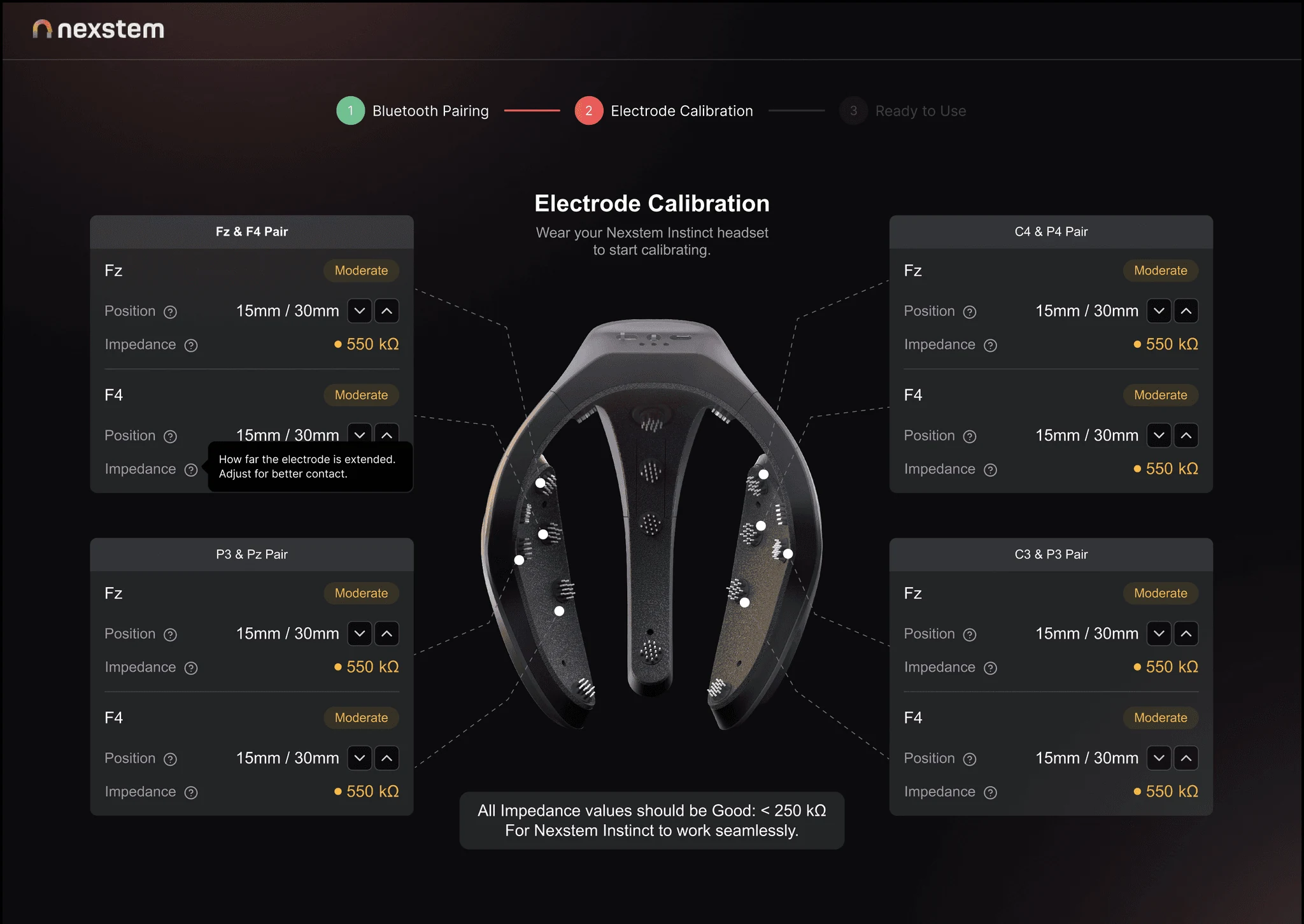
From poor
to good, visibly.
- Sequential flow to break down complexity.
- Added inline feedback (e.g., showing electrode signal strength).
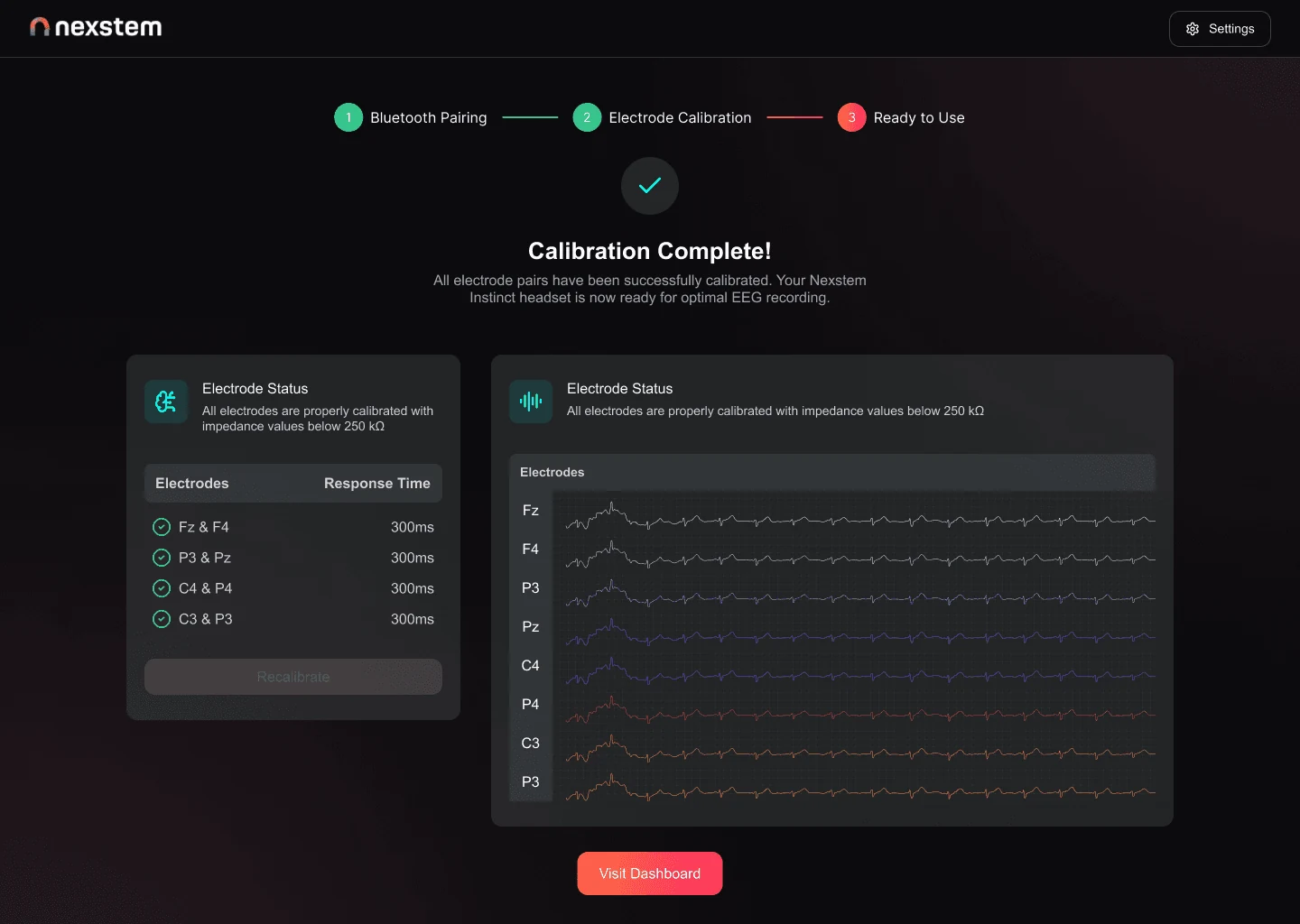
A clear finish
and a next step.
- Positive reinforcement for successful setup.
- Suggested next step or return to dashboard.
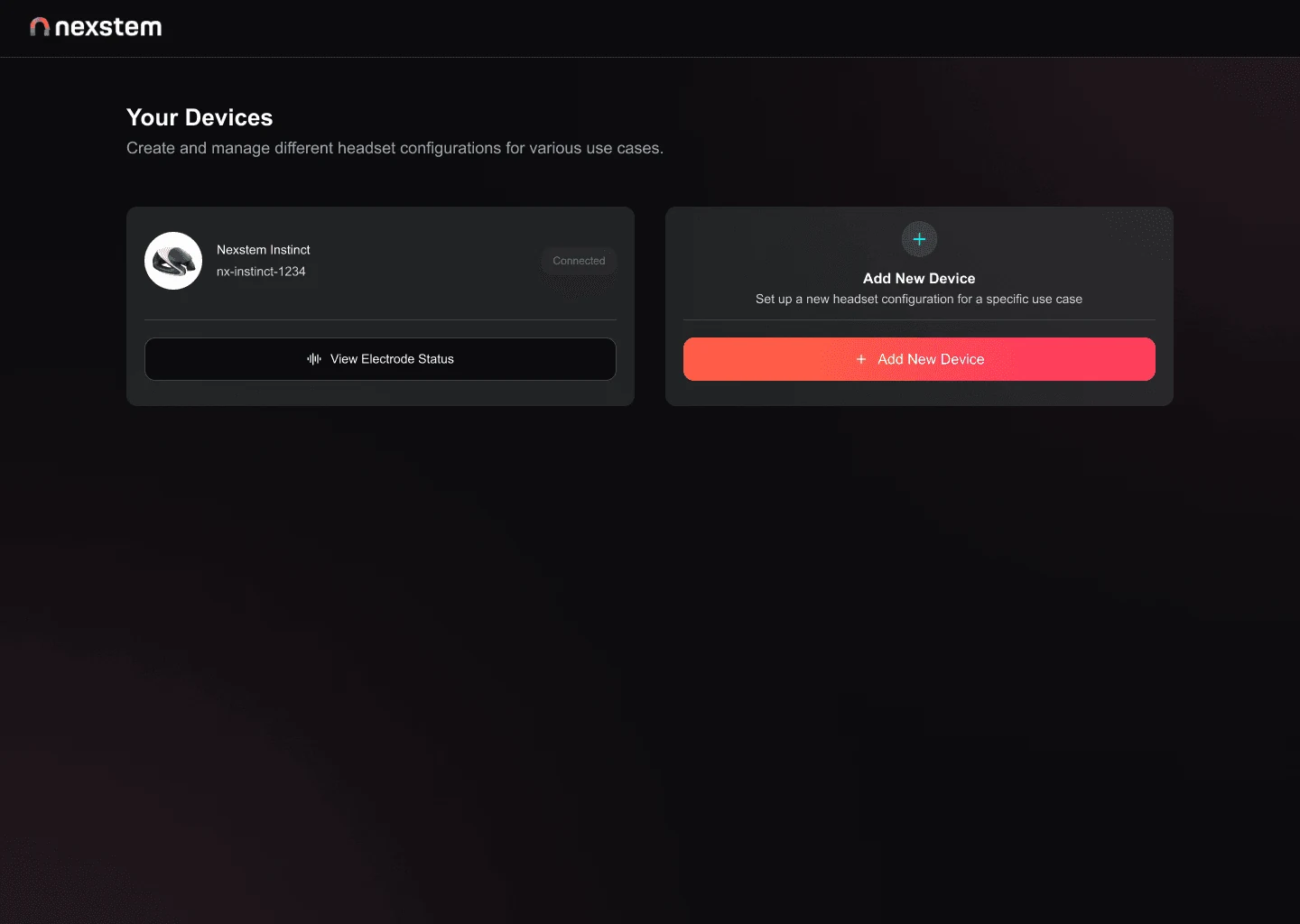
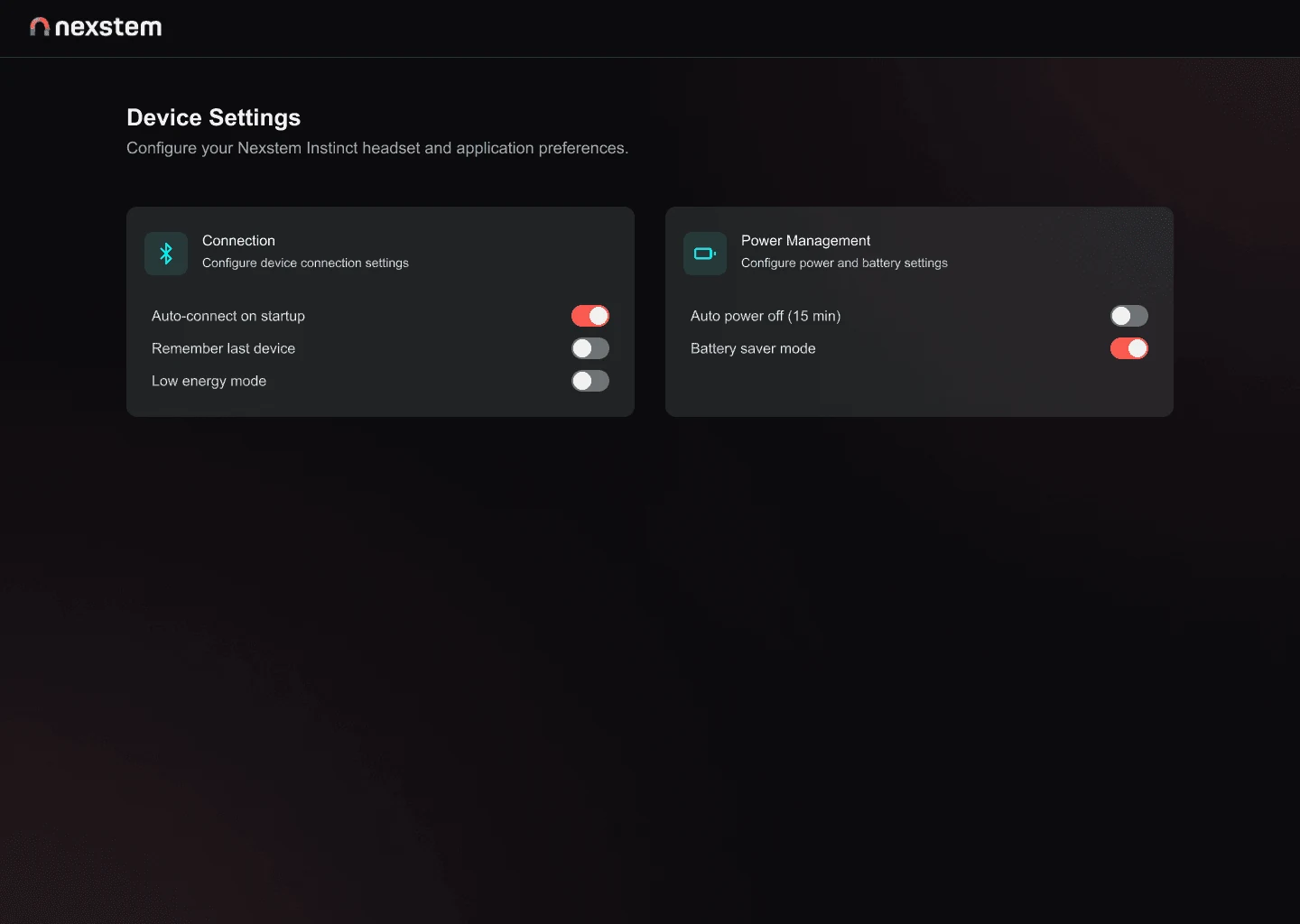
Life after
setup.
- Dashboard gives clear real-time data post-setup.
- Settings allows device management, reconnect, and help access.
How we’d know
it works.
- Participants
- 5 first-time users
- Track
- Time to complete setup, error rate, confidence in calibration
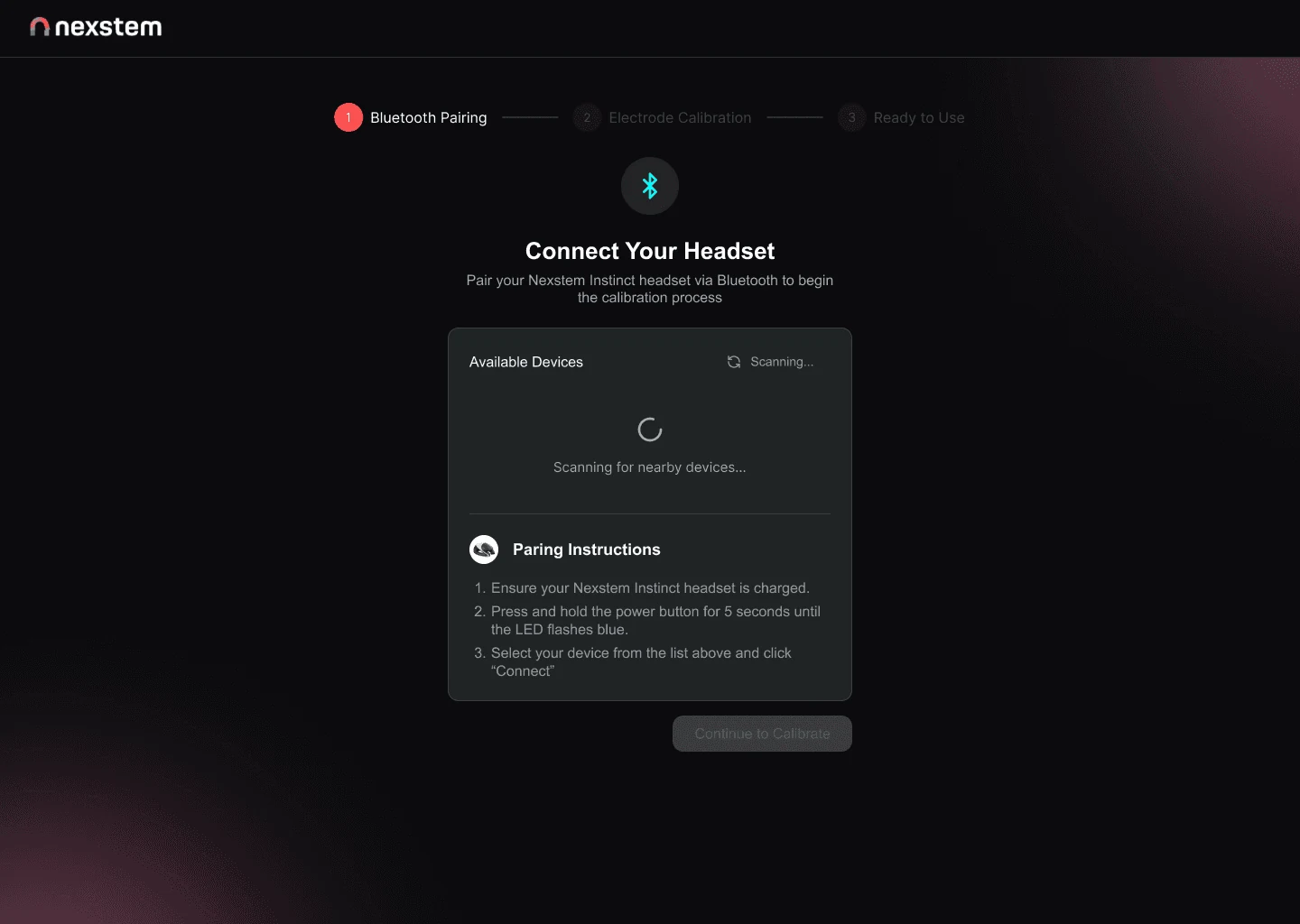
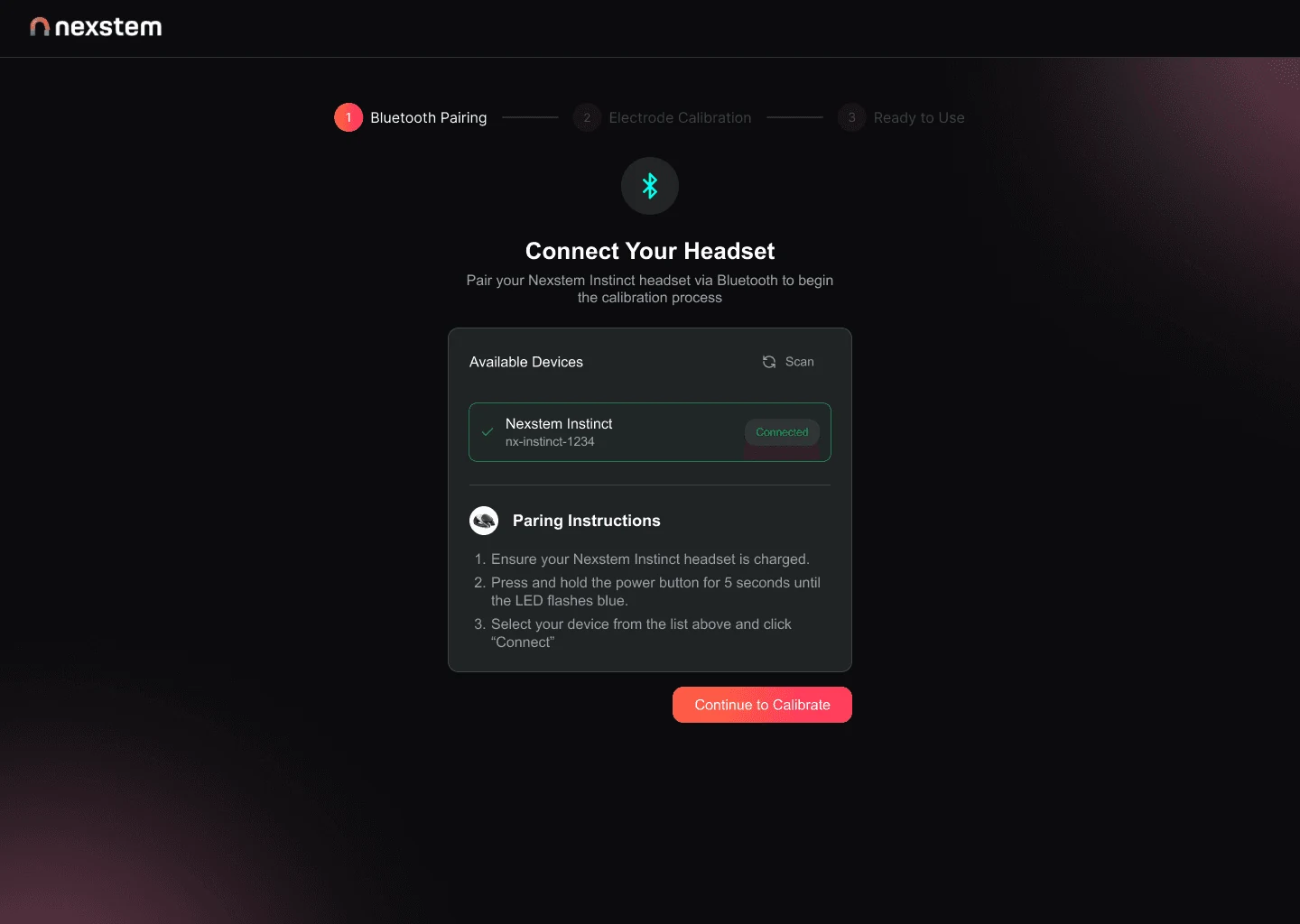
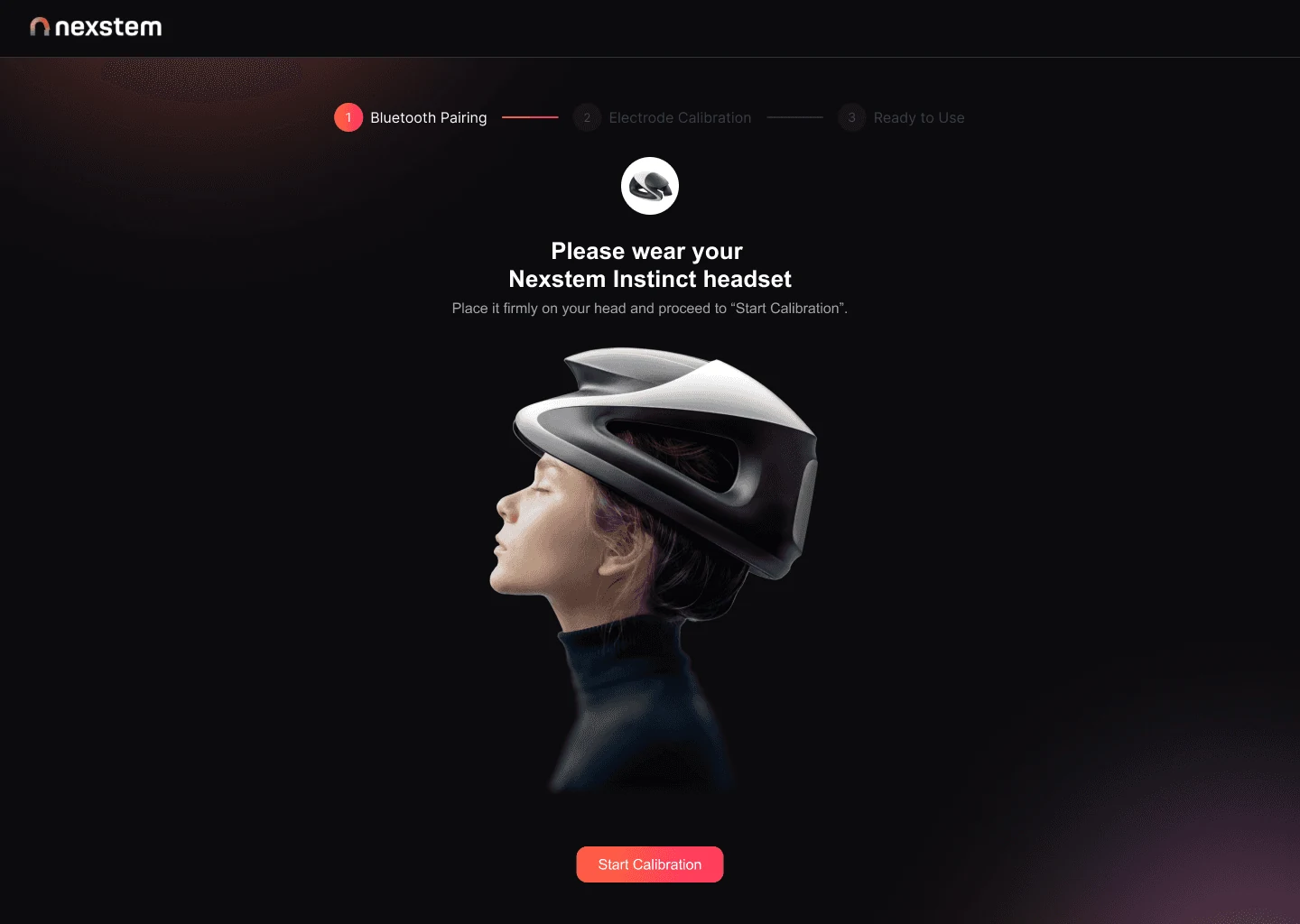
Before the
first electrode.
Clarity beats
complexity.
Designing for hardware calibration taught me that clarity beats complexity, especially when users are dealing with unfamiliar tasks. Small interaction details like feedback, sequencing, and tone made the difference between friction and flow. This project reinforced my belief that in B2B or health tech, good UX is often about making things feel less intimidating, one screen at a time.